What Is SoftWave TRT Shockwave Therapy? A Plain-English Guide
SoftWave TRT is an FDA-cleared, non-invasive treatment that uses unfocused acoustic shockwaves to trigger your body's own healing response. Here's exactly how it works — and what to expect at your first visit.
If you've been chasing pain relief through pills, injections, or invasive procedures with disappointing results, you may have heard about SoftWave TRT — short for Tissue Regeneration Therapy. It belongs to a different category of care than what most patients are used to. Instead of masking symptoms with medication or cutting tissue away through surgery, SoftWave activates the body's own healing machinery and gives chronically injured tissue a reason to repair itself.
This guide walks you through exactly how SoftWave works, what conditions it's used for, how a session feels, and how to know whether it's the right fit for you. For a broader overview of how shockwave technology fits into modern regenerative medicine, you can also read our companion article on what shockwave therapy is.
How SoftWave shockwave therapy works
SoftWave uses an electrohydraulic spark gap to generate true, unfocused shockwaves — brief, high-energy acoustic pulses that travel into tissue. According to the Cleveland Clinic's overview of extracorporeal shockwave therapy, these waves are best understood as mechanical sound energy that triggers a biological response in injured tissue rather than a thermal or electrical one.
Inside the body, those waves do three important things. First, they stimulate angiogenesis — the formation of new blood vessels in tissue that has lost reliable blood supply. Second, they prompt the release of growth factors like VEGF and nitric oxide, which signal the body to rebuild collagen and repair tendon, ligament, and cartilage. Third, and most importantly, they activate the body's resident stem cells in the treated area, recruiting them to where regeneration is needed most.
Unlike focused or radial pressure-wave devices commonly marketed as 'shockwave,' SoftWave delivers a broad, parallel wave that covers a much larger treatment zone and reaches up to 7 cm deep. Because the energy is spread across a wider area, sessions are well tolerated without anesthesia — which is one of the main reasons our patients in Solana Beach choose this technology over older systems.
What conditions does SoftWave treat?
SoftWave is most effective for musculoskeletal and tendon-related conditions where chronic inflammation, poor circulation, or degenerated tissue has stalled the body's natural repair process. Common applications include:
- Back pain, including chronic low back stiffness and disc-related discomfort
- Knee pain and arthritis, meniscus issues, and patellar tendonitis
- Plantar fasciitis and heel pain
- Tennis and golfer's elbow
- Shoulder pain and rotator cuff tendinopathy
- Sciatica and other nerve-related leg pain
- Peripheral neuropathy and numbness in the feet or hands
- Achilles tendonitis and other chronic tendinopathies
You can browse our full directory of conditions we treat for more detail on each one, including what the typical care plan looks like.
What a SoftWave session looks like
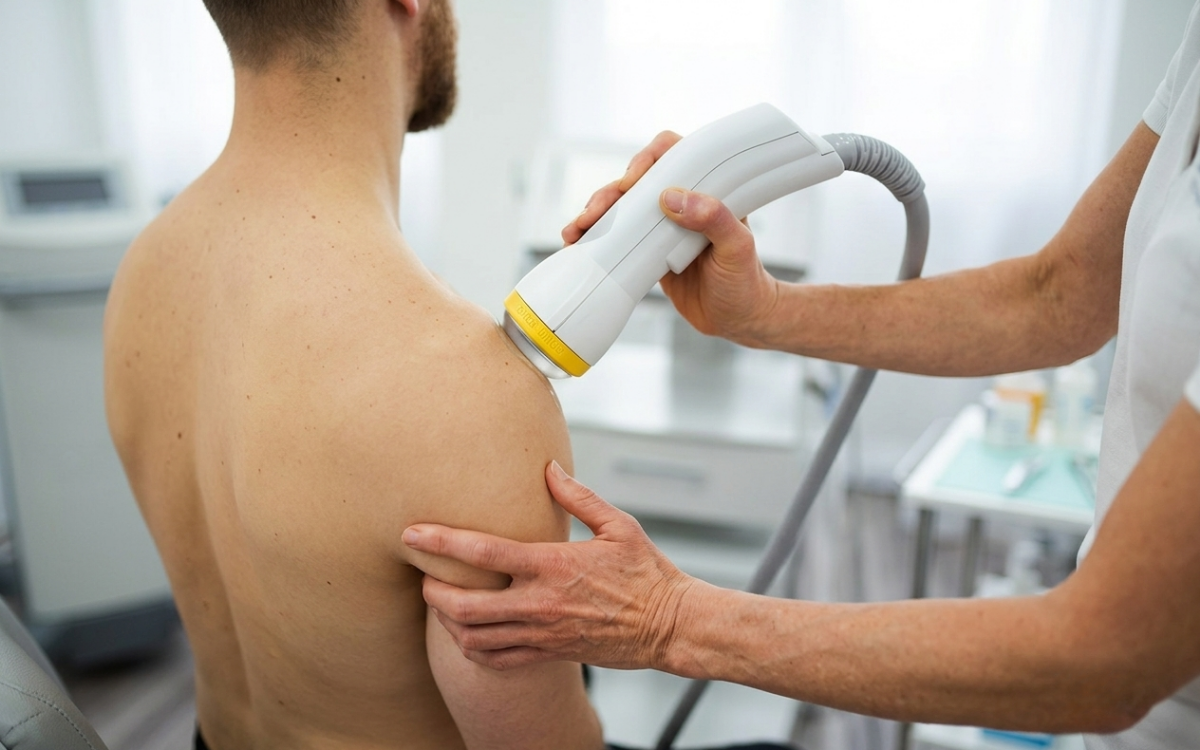
Each session takes about ten minutes. After a brief consultation and exam, we apply ultrasound gel to the area we'll be treating. The SoftWave applicator is placed against the skin and delivers thousands of acoustic pulses across the treatment zone. Most patients describe the sensation as a strong tapping or thumping — noticeable, but not painful.
There are no needles, no medication, and no downtime. You can drive yourself home, return to work, and resume most normal activity the same day. A small number of patients notice mild soreness or fatigue in the treated area for 24 to 48 hours afterward, which is a normal part of the healing response.
A typical SoftWave plan involves 6 to 12 sessions over several weeks, depending on the condition and how long you've had it. Many patients feel meaningful change within the first 3 to 4 visits, and improvement often continues for months after the final treatment as the regenerative cascade plays out.
Why patients choose SoftWave over injections or surgery
Cortisone shots, pain medications, and surgery all have a place — but each carries real trade-offs. Cortisone calms inflammation in the short term but can weaken tendon and cartilage over time. Long-term opioid use carries dependence risk. Surgery involves anesthesia, recovery, and the chance of post-surgical complications.
SoftWave sits in a different category. It addresses the root cause of pain — degenerated, poorly vascularized tissue — without altering anatomy or suppressing the inflammatory signals the body actually needs to heal. For many of our patients, it's the option they wish they'd known about before scheduling surgery or starting another round of injections.
Is SoftWave right for you?
The honest answer is that it depends on your specific situation. SoftWave is exceptional for chronic musculoskeletal pain, tendinopathies, and many forms of arthritis, but it isn't the right tool for every condition. The best way to find out is a consultation where we examine the area, review your history and any imaging, and tell you transparently whether SoftWave is likely to help or whether another approach makes more sense.
If you'd like to learn more about the technology before booking, our SoftWave shockwave therapy page walks through the science in more depth, and our FAQ answers the most common questions we hear. When you're ready, contact our Solana Beach office and we'll get you scheduled.
Ready to find out if SoftWave can help you?
Get our $49 new patient special — consultation, exam, and a sample SoftWave treatment.