
Can SoftWave Therapy Help Knee Arthritis and Chronic Knee Pain?
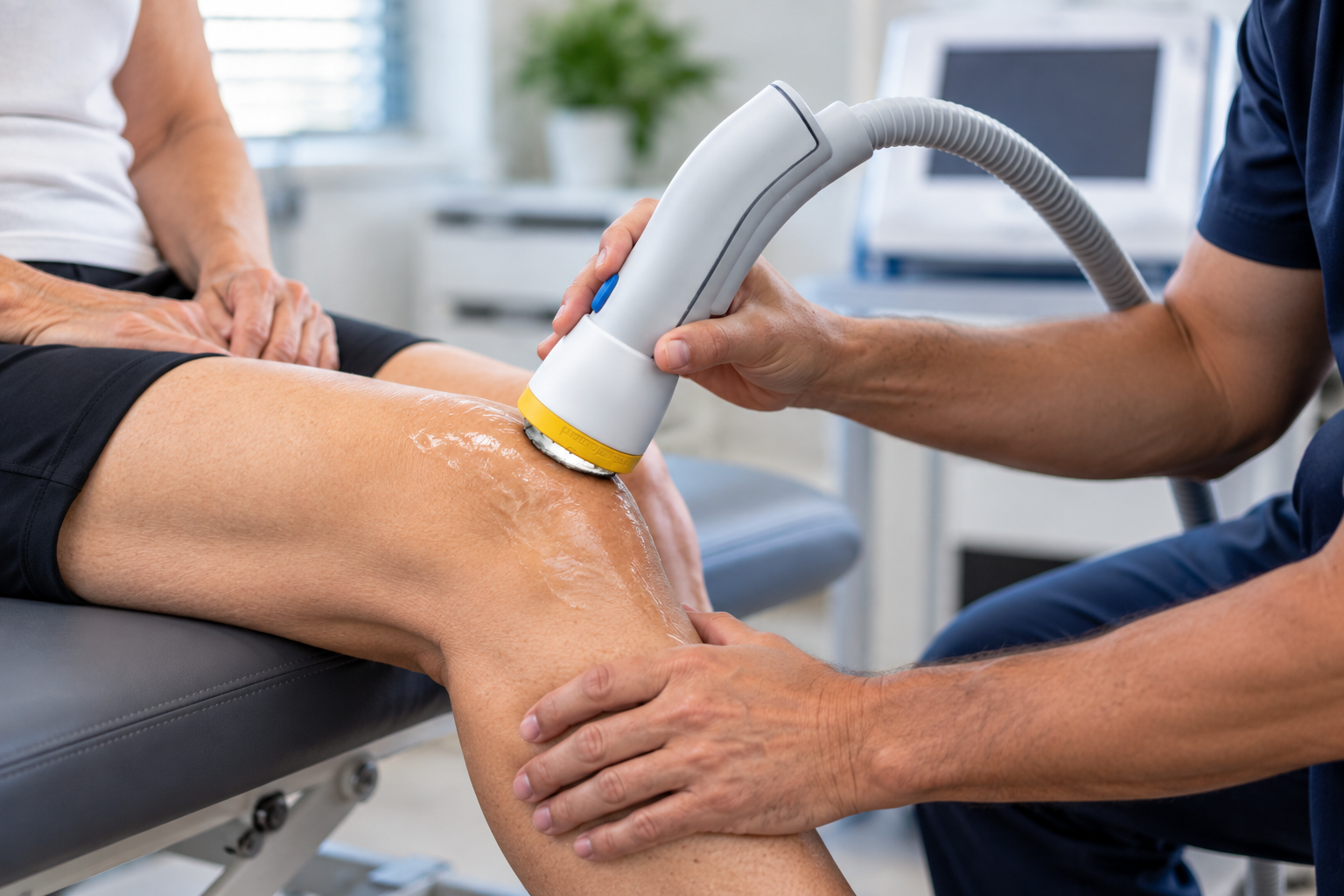
Knee arthritis and chronic knee pain can quietly shrink your world — fewer walks, fewer stairs, fewer rounds of golf. SoftWave Therapy is a non-invasive, drug-free option that targets inflammation and circulation in the joint so your body can do more of its own repair work.
Knee pain is one of the most common reasons adults stop doing what they love. The Arthritis Foundation's guide to knee osteoarthritis notes that the knee is one of the joints most often affected by arthritis, and that pain, stiffness, and swelling tend to build gradually over years. If bracing, gel shots, and anti-inflammatories haven't worked, SoftWave Therapy for knee pain may be worth a look before you consider surgery.
Why knee arthritis pain keeps coming back
Osteoarthritis isn't just 'worn-out cartilage.' It's a whole-joint condition: cartilage thins, the joint lining becomes inflamed, blood flow to the surrounding soft tissue drops, and the nerves around the knee grow more sensitive. That combination is why the ache can persist long after an injury or flare-up should have settled. The American Academy of Orthopaedic Surgeons' OrthoInfo guide to knee osteoarthritis outlines how the process progresses and why conservative care matters early.
How SoftWave Therapy works in the knee
SoftWave TRT (Tissue Regeneration Therapy) delivers patented, unfocused electrohydraulic shockwaves into the tissue around and within reach of the knee joint. Those acoustic waves trigger biological responses your body may have stopped producing on its own:
- **Angiogenesis** — new blood vessel growth that restores circulation to oxygen-starved joint tissue
- **Reduced inflammation** — calming the chemistry that keeps an arthritic knee flared and swollen
- **Stem cell activation** — recruiting your body's own repair cells to the treated area
- **Improved mobility** — softening adhesions and trigger points that limit bending and straightening
Research summarized by Physiopedia's overview of extracorporeal shockwave therapy shows shockwave technology can reduce pain and improve function across a wide range of musculoskeletal conditions, including knee osteoarthritis and tendon problems.
Knee problems that may respond
- Osteoarthritis and 'bone-on-bone' knee pain
- Chronic swelling, stiffness, and morning gel-like tightness
- Patellar tendonitis / jumper's knee (see our patellar tendonitis page)
- Post-injury or post-surgical stiffness and scar tissue
- Pain going down stairs, kneeling, or standing up from a chair
- General chronic knee pain (see our knee pain page)
What a knee session feels like
A SoftWave session for the knee takes about 10–15 minutes. No needles, no numbing, no downtime — you walk in and walk out. You'll feel a tapping sensation and a productive pressure as the applicator moves around the joint. Many patients notice easier stairs within the first few visits, with a typical protocol running 6–8 sessions about a week apart. Want to see it? Watch clips on our shockwave therapy in action page.
How does it compare to cortisone or gel injections?
Cortisone can quiet a flare quickly, but repeated injections may weaken cartilage and soft tissue over time. SoftWave takes a different approach — it aims to improve the joint environment rather than mask the signal. Our side-by-side comparison of SoftWave vs. cortisone injections breaks down the trade-offs so you can decide with your provider.
SoftWave isn't right for every knee. Severe deformity, joint instability, infection, or an advanced joint that already needs replacement should be evaluated medically first. We screen for those during your consultation before recommending care.
Ready to see if SoftWave can help your knee?
If knee arthritis is limiting your walks, workouts, or sleep, our $49 New Patient Special includes a consultation, exam, and a sample SoftWave treatment so you can feel the difference before committing to a full plan.
Ready to find out if SoftWave can help you?
Get our $49 new patient special — consultation, exam, and a sample SoftWave treatment.