
Shin Splints vs. Compartment Syndrome: How to Tell the Difference
Both conditions cause shin and lower-leg pain during exercise, but they're driven by very different problems — and getting the diagnosis right changes everything about the treatment plan.
If your shins burn, ache, or throb every time you run, hike, or even walk briskly, you're not alone — and the cause isn't always what you think. Two very different conditions get blamed for nearly every case of exercise-induced lower-leg pain: medial tibial stress syndrome (commonly called shin splints) and chronic exertional compartment syndrome (CECS). They feel similar at first, but they have completely different mechanisms — and the wrong diagnosis will keep you sidelined for months.
This guide walks through how to tell them apart, when each one is dangerous, and how regenerative options like SoftWave shockwave therapy help patients return to running without surgery or extended downtime. If you want a broader overview of how we treat overuse injuries, our shin splints treatment page goes deeper on the clinical approach.
What shin splints actually are
Medial tibial stress syndrome (MTSS) is the proper medical term for what most people call shin splints. It's an overuse injury where the connective tissue and bone along the inside of the tibia (your shin bone) become inflamed from repetitive impact — most commonly running, jumping, military training, or sudden increases in mileage. According to the American Academy of Orthopaedic Surgeons, MTSS accounts for up to 35% of all running-related injuries.
The hallmark symptom is a dull, aching pain along the inner edge of the shin that's worst at the start of activity and often improves as you warm up — only to return, sometimes worse, after the workout ends. Pressing along the inside of the tibia reproduces the pain in a diffuse band, not a single sharp spot.
What chronic exertional compartment syndrome is
Chronic exertional compartment syndrome is a different beast entirely. The muscles of your lower leg are wrapped in tough fascia and divided into compartments. During hard exercise, muscle volume can increase by 20% as blood floods the tissue. In CECS, the fascia doesn't stretch enough to accommodate that swelling — pressure inside the compartment spikes, blood flow gets choked off, and the result is intense cramping, tightness, numbness, or burning that builds throughout the workout.
Unlike shin splints, CECS pain almost always forces you to stop exercising and resolves within 15 to 30 minutes of rest. You may also notice foot drop, tingling in the top of the foot, or a visibly bulging compartment after exertion. The Mayo Clinic's overview of chronic exertional compartment syndrome is a good lay-friendly reference if you want to read more.
Side-by-side: how to tell them apart
- **Pain quality** — Shin splints: dull ache along the inner shin. CECS: tight, squeezing, cramping deep in the muscle compartment.
- **Timing** — Shin splints often warm up and ease mid-workout. CECS predictably builds during exercise and forces you to stop.
- **Location** — Shin splints hurt along a band on the inside of the tibia. CECS hurts in the muscle belly (most commonly the front/outside of the shin).
- **Rest response** — Shin splints can linger for hours after activity. CECS usually clears within 30 minutes of stopping.
- **Neurological symptoms** — Shin splints don't cause numbness. CECS often produces tingling, foot drop, or weakness during attacks.
If your symptoms include numbness, weakness, or sudden severe swelling — especially if pain doesn't resolve with rest — get evaluated promptly. Acute compartment syndrome (a related but rarer condition usually caused by trauma) is a true surgical emergency.
Why this matters for treatment
Shin splints respond very well to conservative, regenerative care. The tissue is inflamed and overloaded, but it's healthy and ready to heal once you reduce the mechanical stress and stimulate proper repair. Rest, gait analysis, footwear changes, and targeted regenerative therapy can resolve MTSS in weeks.
CECS, on the other hand, is structural. Conservative care can help symptoms in mild cases, but moderate to severe CECS often requires a surgical fasciotomy to release the compartment. Spending months treating CECS as if it were shin splints is one of the most common — and most frustrating — diagnostic mistakes in sports medicine.
How SoftWave shockwave therapy treats shin splints
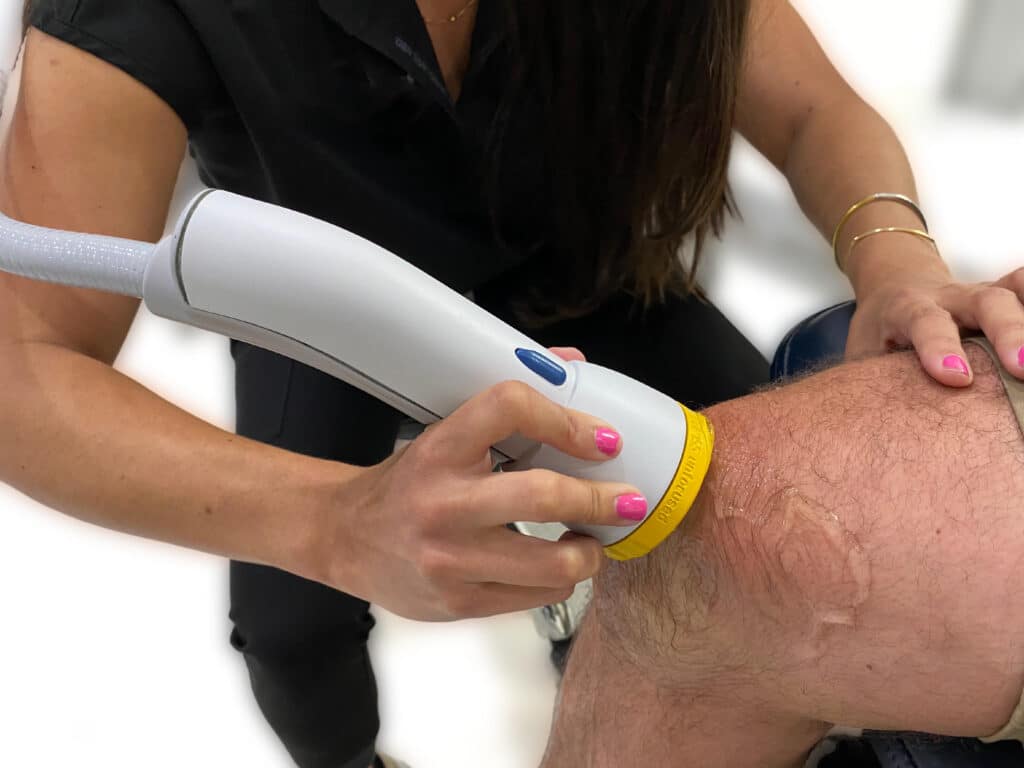
For confirmed MTSS, SoftWave Tissue Regeneration Therapy is one of the most effective non-surgical options available. SoftWave delivers true, unfocused acoustic shockwaves that penetrate up to 7 cm into the tibial periosteum and surrounding fascia. Inside the tissue, those waves trigger three changes: new blood vessel formation (angiogenesis), release of growth factors like VEGF that rebuild collagen, and activation of resident stem cells that repair the chronic micro-injury at the bone-fascia interface.
Patients typically need 6 to 8 sessions over several weeks. Each session takes about 10 minutes, requires no anesthesia, and you walk out and resume normal activity the same day. For more detail on the technology, see our comprehensive SoftWave guide. For other running injuries we treat with the same approach, browse our conditions directory.
When to come in
If you've had shin pain for more than two weeks that doesn't improve with relative rest, or if your symptoms include tightness or numbness that forces you to stop mid-workout, get it evaluated. We'll perform a focused exam, talk through your training history, refer for compartment pressure testing if CECS is suspected, and lay out a transparent plan for whichever diagnosis fits.
Contact our Solana Beach office to schedule an evaluation, or book your visit online. The earlier we catch overuse injuries, the faster you get back on the trail.
Ready to find out if SoftWave can help you?
Get our $49 new patient special — consultation, exam, and a sample SoftWave treatment.