SoftWave Therapy for Back Pain and Sciatica: A Drug-Free Path to Relief
Back pain and sciatica are the top reasons Americans see a doctor. Here's how SoftWave addresses the soft tissue and nerve irritation driving both — without drugs, needles, or surgery.
Back pain and sciatica are two of the most common reasons Americans see a doctor — and two of the most expensive problems in modern healthcare. The standard playbook usually moves from anti-inflammatories and muscle relaxers to physical therapy, then to epidural injections, and ultimately to spine surgery for the patients who don't get better. Each step provides temporary relief at best, and each carries real side effects.
SoftWave Tissue Regeneration Therapy offers a fundamentally different approach. Instead of suppressing pain signals or cutting tissue away, it stimulates the soft tissue around the spine to heal — often reducing the inflammation that compresses nerves in the first place. This article walks through how SoftWave fits into chronic back and sciatic pain care.
What's actually causing your pain
The first thing most chronic back pain patients learn is that there's rarely a single 'thing' to blame. The pain usually emerges from a combination of factors: muscle dysfunction and chronic spasm, facet joint irritation, disc wear and bulging, inflamed soft tissue compressing nerve roots, and accumulated scar tissue from old injuries.
Sciatica is the classic example. As the Mayo Clinic explains in its overview of sciatica, the condition refers to pain that radiates along the path of the sciatic nerve — usually triggered by a herniated disc, bone spur, or narrowing of the spine that compresses part of the nerve. The pain you feel down the leg is real, but the actual source is usually inflammation and pressure in the low back or pelvis.
How SoftWave addresses the soft tissue layer
Most conventional treatments target nerves directly — through medication, injections that flood the nerve root with anti-inflammatory drugs, or surgery that decompresses the nerve mechanically. SoftWave takes a different angle. It treats the surrounding soft tissue — deep spinal muscles, connective tissue, ligaments, and the bursae and fascia of the hip and pelvis — and lets the calming effect on those tissues reduce pressure on the nerve.
Inside the tissue, SoftWave's broad-focus shockwaves stimulate blood flow, recruit stem cells, and trigger the release of growth factors that promote repair. As chronic inflammation winds down and tissue health improves, many sciatica patients notice their leg pain easing within the first few sessions — even before their back fully feels different.
Common back and sciatica patterns we see
In our Solana Beach office, SoftWave has helped patients with a wide range of back and nerve-related problems:
- Chronic lower back pain that hasn't improved with PT, chiropractic, or massage
- Sciatica with leg pain, numbness, or tingling
- Post-surgical low back patients with residual pain
- Piriformis syndrome and deep glute pain
- Hip pain that overlaps with back symptoms
- Patients who want to avoid epidural injections or another round of medication
For a deeper breakdown of how we approach each, see our back pain and sciatica condition pages.
What a typical care plan looks like
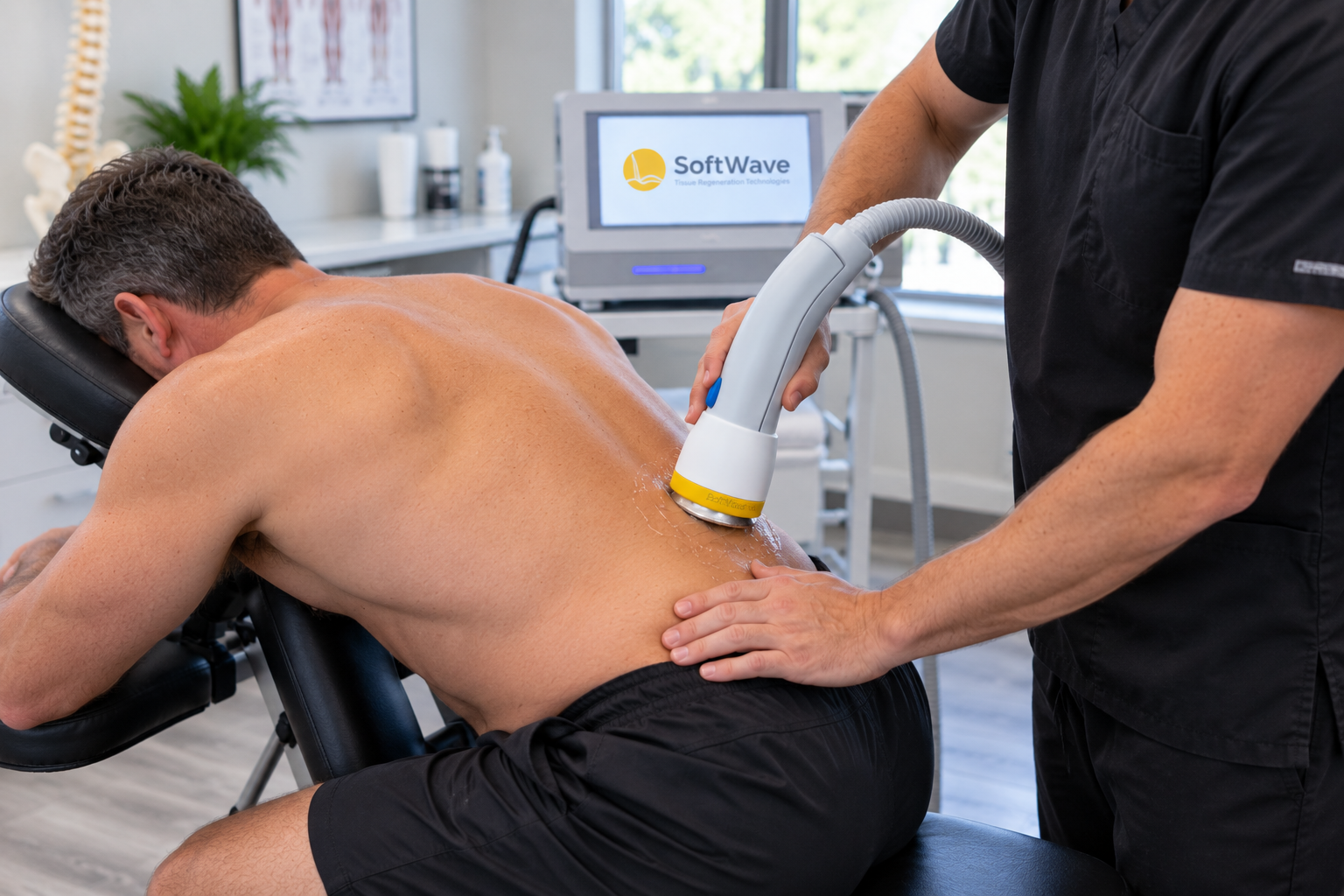
Back and sciatic pain plans typically run 6 to 12 SoftWave sessions over several weeks. Sessions take about ten minutes and feel like a firm, rhythmic tapping across the low back, glutes, or pelvis. There are no needles, no anesthesia, and no downtime — you can drive yourself home and return to normal activity the same day.
Many patients notice a reduction in leg pain or radiating symptoms within the first 3 to 4 sessions. Back stiffness and pain often continue to improve through the full course of care and for several months afterward as the underlying tissue continues to remodel.
When MRIs do — and don't — matter
Patients often ask whether they need an MRI before starting SoftWave. The honest answer is: not always. A careful physical exam, a clear history, and any previous imaging you already have are usually enough to put together a plan. If there's any indication that imaging would change our approach — for example, suspected severe stenosis or a progressive neurological issue — we'll either refer you out or coordinate with your other providers.
Who is a good candidate?
SoftWave tends to do especially well for back and sciatic pain patients who:
- Have had chronic pain for more than a few months and haven't fully responded to conservative care
- Want to avoid epidural injections or another course of medication
- Have already had back surgery and still have residual pain
- Are not currently candidates for surgery but have been told they may eventually need it
- Want a drug-free, non-invasive option they can layer with their existing routine
Severe structural issues — like a large herniation with progressive weakness — may still warrant a surgical consult, and we'll tell you honestly if that's where we think you fit.
The bigger picture
Chronic back pain rarely has a single cause, and it rarely has a single fix. SoftWave isn't a magic wand, but for many of the patients we see, it's the missing piece in a recovery puzzle they've been trying to solve for years. To learn more about the technology, read our SoftWave therapy overview. To read what other patients have experienced, browse our testimonials. When you're ready to take the next step, contact our Solana Beach office and we'll get you scheduled.
Ready to find out if SoftWave can help you?
Get our $49 new patient special — consultation, exam, and a sample SoftWave treatment.