
Shockwave Therapy vs. Cortisone Injections: Which Is Better Long-Term?
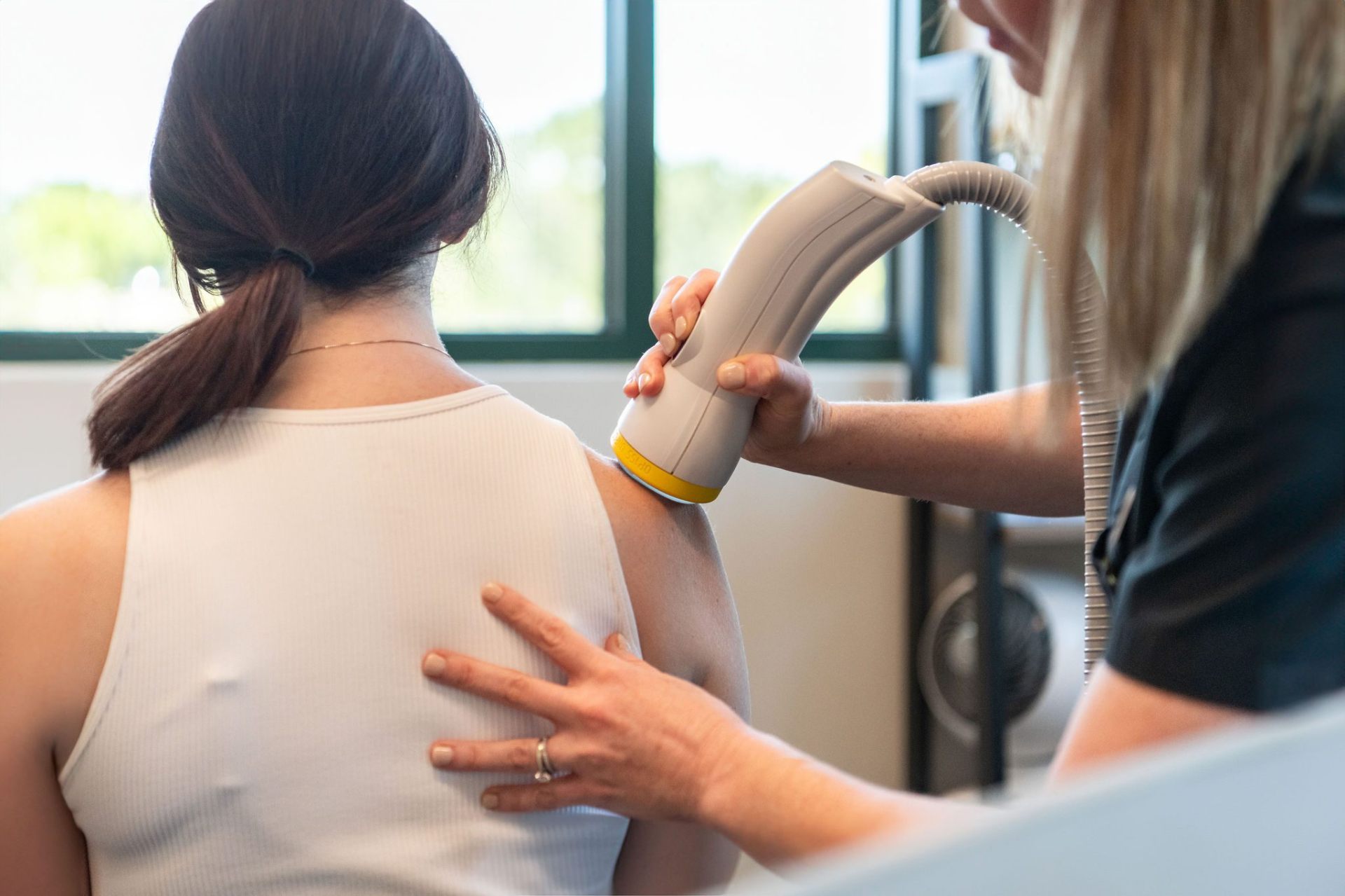
Cortisone offers fast relief. SoftWave offers actual tissue repair. Here's what the research says — and what to consider before your next shot.
Cortisone injections are one of the most commonly offered treatments for joint and tendon pain. If you've ever asked your doctor about a stubborn shoulder, an arthritic knee, or chronic tennis elbow, there's a good chance the next step you were offered was a shot. Cortisone can work — sometimes dramatically — but the long-term picture is more complicated than most patients are told.
This article walks through what cortisone actually does, where it falls short, how SoftWave shockwave therapy compares, and how to think about combining them when that makes sense. The goal isn't to villainize cortisone; it's to help you make an informed choice rather than defaulting to whichever option you're handed first.
What cortisone actually does
Cortisone is a synthetic corticosteroid — a powerful anti-inflammatory medication. When injected into a joint or around an inflamed tendon, it suppresses the inflammatory response, which in turn reduces pain and stiffness, often within a few days. For acute flare-ups, that can be a genuine win.
The effect typically lasts anywhere from a few weeks to a few months, depending on the dose, the location, and the underlying condition. Patients who respond well often describe almost immediate relief, especially with bursitis, frozen shoulder, or acute tendon inflammation.
Where cortisone falls short
The trade-offs show up over time. Multiple high-quality studies and major medical organizations have flagged concerns about repeated cortisone injections, especially in weight-bearing joints and load-bearing tendons. The Mayo Clinic's overview of cortisone shots summarizes the main concerns clearly: repeated injections can damage cartilage, weaken tendons, and may eventually accelerate the very joint deterioration patients are trying to avoid.
In practical terms, the limits show up as:
- Relief that is temporary — typically weeks to a few months
- A treatment that addresses symptoms but not the underlying tissue damage
- Risk of weakening tendons and accelerating cartilage loss with repeated use
- Most physicians limit patients to 3–4 injections per joint per year
- Diminishing returns — many patients find each successive shot doesn't work as well as the last
None of this means cortisone is bad. It means cortisone is best suited to short-term, targeted use, not as a long-term management strategy for chronic conditions.
How SoftWave is fundamentally different
SoftWave doesn't suppress inflammation — it uses the body's inflammatory and regenerative response constructively. Each session delivers broad-focus acoustic shockwaves into the injured area, which stimulates blood flow, recruits stem cells, releases growth factors, and triggers actual tissue repair.
The result is a slower onset than cortisone — patients usually notice change over 3 to 4 sessions rather than 3 to 4 days — but the trajectory is different. Instead of fading, the benefit continues to build through the course of care and for months afterward as the tissue continues to remodel. The fundamental question becomes: do you want temporary symptom relief, or do you want the tissue to actually heal?
Cortisone vs SoftWave by condition
Knee arthritis and tendonitis
Cortisone gives fast relief but doesn't change cartilage health, and repeated injections may actually accelerate cartilage loss. SoftWave is better positioned for chronic knee pain and arthritis, where the underlying problem is tissue degeneration rather than acute inflammation alone.
Plantar fasciitis
Cortisone can quiet pain temporarily but increases the risk of fascia rupture with repeat use. SoftWave addresses the chronically degenerated fascia at the source and is widely considered the gold-standard non-surgical option for stubborn plantar fasciitis.
Shoulder pain and frozen shoulder
Cortisone has a role in calming the acute inflammation of frozen shoulder, especially early on. SoftWave works well across all phases by breaking up capsular adhesions and stimulating tissue repair. For chronic shoulder pain, the two can complement each other.
Tennis and golfer's elbow
This is one of the clearest cases against repeated cortisone. Research has shown that cortisone for tennis elbow provides short-term relief but worse long-term outcomes compared to letting the tendon heal — or to actively stimulating that healing with shockwave. For chronic elbow pain, SoftWave is usually the better long-term call.
Can you do both?
Yes, and many patients do. Some scenarios where combining them makes sense include:
- Using cortisone for acute relief during a flare-up while starting a SoftWave course for long-term repair
- Adding SoftWave after a recent injection to extend the benefit and address underlying tissue damage
- Using SoftWave as a primary treatment with cortisone held in reserve for unusually severe flare-ups
We're happy to coordinate with your other providers — primary care, orthopedist, rheumatologist — on a plan that makes sense for your situation. Honest, integrated care almost always beats turf wars.
How to decide what's right for you
If you're trying to choose between an injection and SoftWave, a few simple questions can help clarify:
- How chronic is the problem? (Acute flare-up vs. years-long degeneration?)
- How many cortisone shots have you already had in this joint or tendon?
- Are you trying to extend the life of the joint, or just get through a specific event?
- How important is avoiding medication or anesthesia to you?
The best way to get a clear answer is a consultation where we look at your specific situation. Read more on our SoftWave therapy page, browse our conditions we treat, and contact our Solana Beach office when you're ready to talk through your options.
Ready to find out if SoftWave can help you?
Get our $49 new patient special — consultation, exam, and a sample SoftWave treatment.