
Shockwave Therapy for Plantar Fasciitis: The Gold-Standard Non-Surgical Option
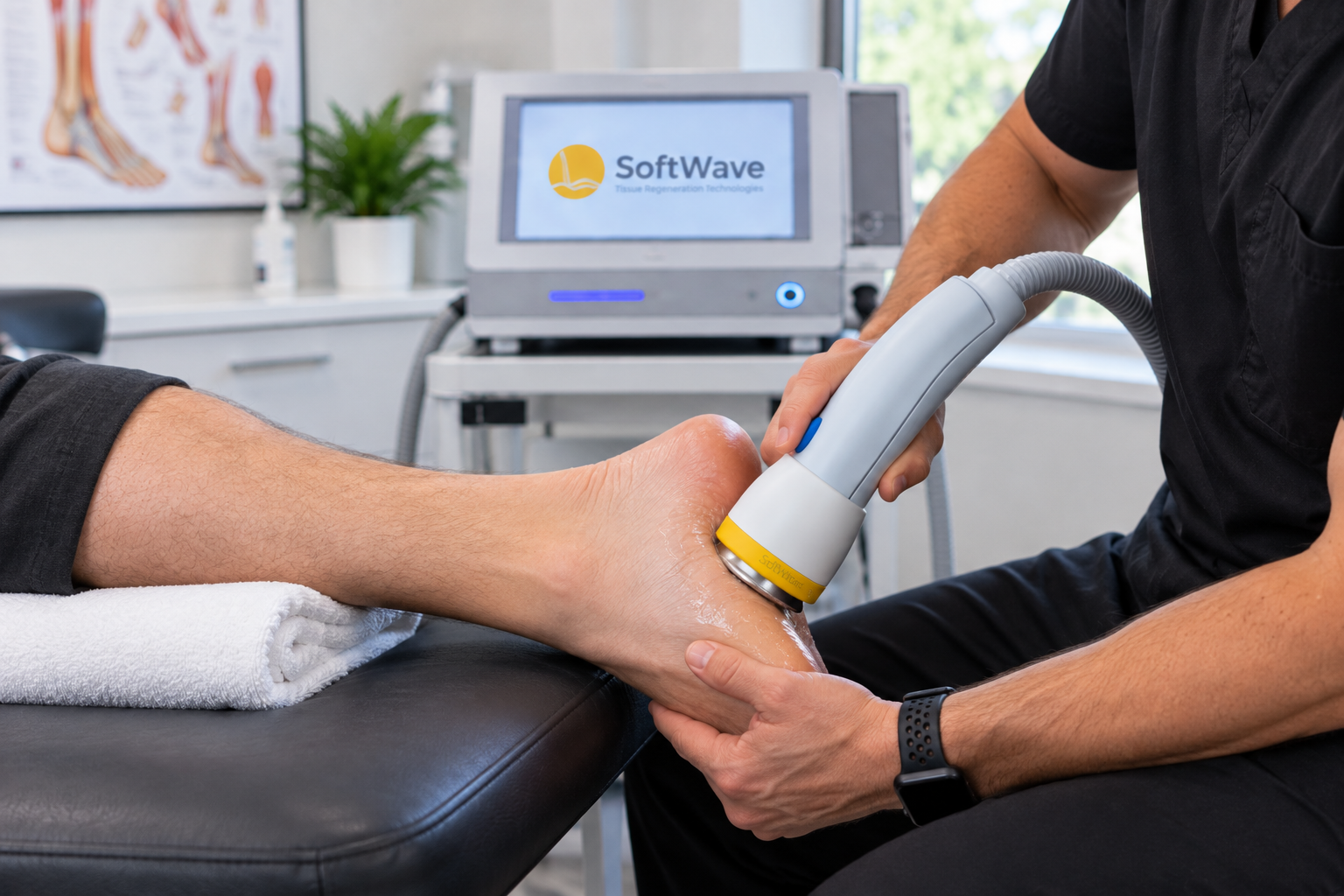
Plantar fasciitis is notoriously stubborn. Here's why shockwave therapy works when stretching, orthotics, night splints, and injections haven't moved the needle.
If your first steps out of bed in the morning feel like stepping on a nail, you've experienced the signature pain of plantar fasciitis. It's one of the most common foot complaints in adults — and one of the most stubborn. Many patients cycle through stretching protocols, custom orthotics, night splints, and cortisone injections without lasting relief, and a smaller group eventually faces the prospect of plantar fascia release surgery.
Extracorporeal shockwave therapy has become a widely recognized non-surgical option for chronic plantar fasciitis, and SoftWave is one of the most advanced delivery systems available. This article explains why plantar fasciitis is so hard to fix, how shockwave addresses the underlying problem, and what to expect at our Solana Beach office.
Why plantar fasciitis is so hard to fix
The plantar fascia is a thick band of connective tissue that runs from the heel to the base of the toes, supporting the arch of the foot. When it becomes irritated and chronically inflamed, the body initially tries to repair it — but the fascia has limited blood supply, so repair signals don't translate into actual healing. Over time, the tissue transitions from acute inflammation (plantar fasciitis) into chronic degeneration (plantar fasciosis), which is much harder to reverse.
Stretching and orthotics can offload the fascia and reduce strain, but they don't restart the healing process. Cortisone injections can temporarily quiet pain, but repeated injections weaken the fascia and increase the risk of rupture. According to the American Academy of Orthopaedic Surgeons' patient guide to plantar fasciitis, most cases improve with conservative care over many months — but a significant minority become chronic and need a more active intervention.
How SoftWave restarts the healing process
SoftWave addresses exactly the bottleneck that makes plantar fasciitis so stubborn: poor circulation to degenerated tissue. The broad-focus acoustic shockwaves penetrate into the fascia and surrounding heel structures and trigger several biological responses.
- Neovascularization — new blood vessels grow into the fascia, restoring the supply line that healing requires
- Recruitment of resident stem cells to the chronically damaged tissue
- Release of growth factors that signal the body to lay down fresh, organized collagen
- Breakdown of disorganized scar tissue and calcium deposits that have accumulated in chronic cases
In other words, SoftWave doesn't just numb the pain — it gives the fascia the conditions it needs to actually heal.
What to expect from treatment
Most plantar fasciitis plans involve 5 to 8 ten-minute SoftWave sessions, typically spaced once or twice a week. There's no boot, brace, taping protocol, or recovery time required. You'll walk in, lie comfortably on the table, and walk out. There are no injections and no anesthesia.
During the session, you'll feel a strong tapping or thumping sensation in the heel and arch. It's noticeable but not painful, and we can adjust intensity in real time if a particular spot is tender. After the session, many patients report a temporary feeling of warmth or lightness in the foot, followed by a steady decrease in morning pain over the next several days.
How quickly will you feel better?
Plantar fasciitis is a slow-healing condition, but most patients begin to notice meaningful change within the first 3 to 4 sessions — usually less morning pain, easier walking after sitting, and reduced arch tightness. Full benefit often continues to build for several months after the final treatment as the fascia continues to remodel.
Patients who have failed previous conservative care often respond especially well, because the underlying problem — chronic degeneration with poor blood supply — is exactly what SoftWave is designed to address.
Pairing SoftWave with simple at-home work
Shockwave therapy works best when the rest of the foot and lower leg are supporting recovery rather than fighting it. We typically pair SoftWave with a short list of practical habits:
- Daily calf and arch mobility work (we'll show you specifically what to do)
- Supportive footwear during recovery — even around the house
- A short period of load modification for runners and high-mileage walkers
- Avoiding long, barefoot stints on hard floors during the early weeks of care
These changes are simple, but they make a meaningful difference in how quickly and durably the fascia heals.
Who is a good candidate?
SoftWave is well suited for:
- Chronic plantar fasciitis that has lasted more than 6 weeks
- Patients who have failed stretching, orthotics, or night splints
- Patients who want to avoid cortisone injections or have already had one or more
- Runners and athletes who can't afford extended downtime
- Patients who have been advised they may need plantar fascia release surgery
For a complete overview of our approach, see our plantar fasciitis condition page. To read what other patients have experienced, browse our testimonials. When you're ready, contact us to schedule your first visit — and ask about our $49 new patient special for first-time appointments.
Ready to find out if SoftWave can help you?
Get our $49 new patient special — consultation, exam, and a sample SoftWave treatment.