
Shockwave Therapy for Rotator Cuff and Shoulder Pain: What to Know in 2026
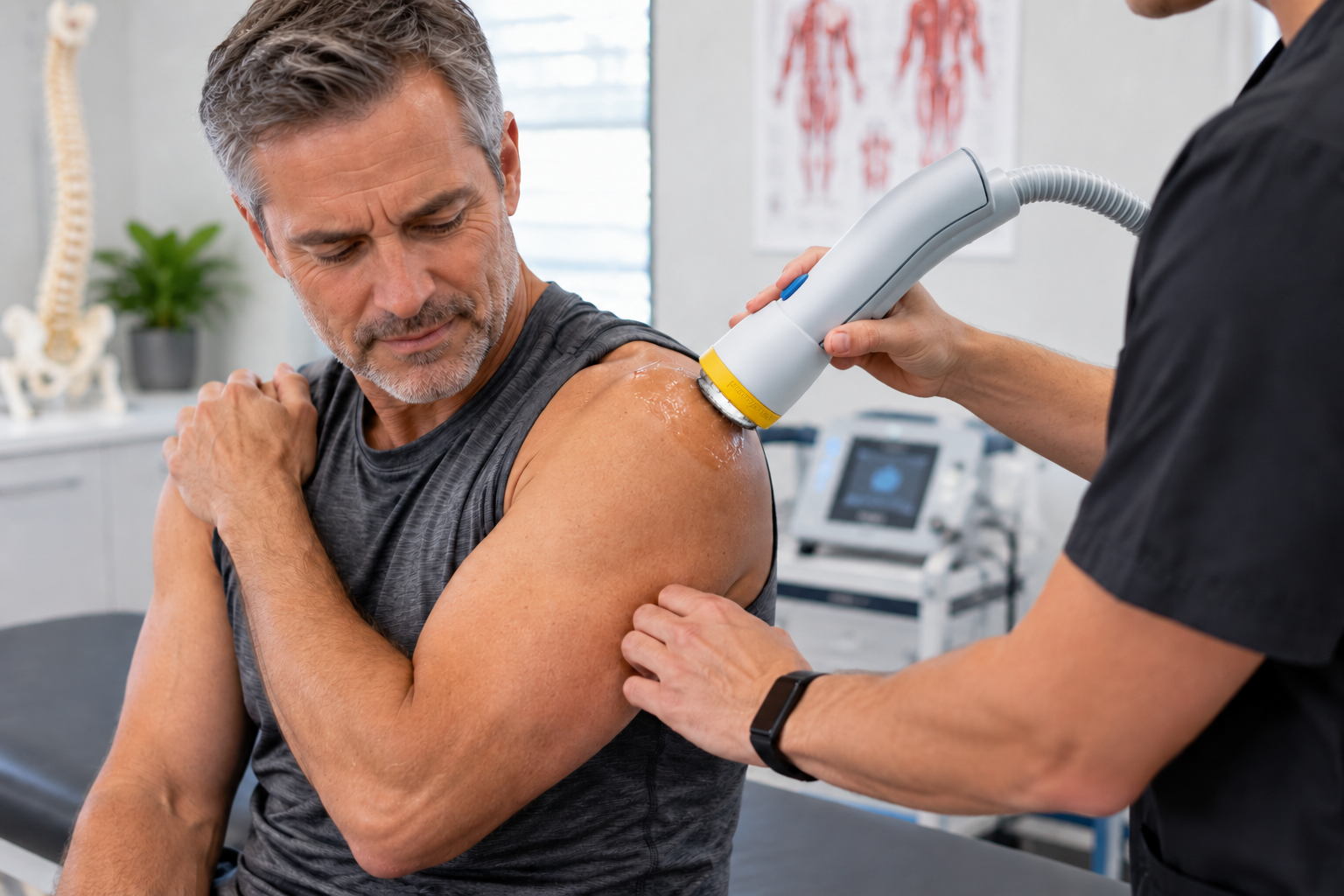
Rotator cuff injuries don't have to mean surgery. Here's how SoftWave shockwave therapy treats rotator cuff tendinopathy, calcific deposits, and frozen shoulder — and what realistic results look like.
The rotator cuff is the small group of muscles and tendons that keeps the shoulder joint stable through every reach, lift, and overhead motion. It's also one of the most commonly injured structures in the body — and one of the most over-treated with steroid shots that wear out long before the tissue actually heals.
SoftWave TRT is changing what's possible for these injuries. This post walks through which rotator cuff and shoulder conditions respond best to shockwave therapy, how the treatment works on tendon tissue, and what to expect from a course of care at our Solana Beach clinic.
Common shoulder problems we treat
Most of the shoulder cases we see fall into one of these patterns:
- Rotator cuff tendinopathy and partial-thickness tears
- Calcific tendinitis with calcium deposits in the supraspinatus
- Subacromial impingement and chronic bursitis
- Adhesive capsulitis (frozen shoulder) in any phase
- Bicep tendinitis and chronic AC joint pain
- Post-surgical stiffness once cleared by your orthopedist
If you've been told you have a 'cuff problem' but want to avoid surgery, you're in exactly the population SoftWave was built for. Our full overview lives on the shoulder pain treatment page.
Why the rotator cuff struggles to heal on its own
Rotator cuff tendons live in a tight space with limited blood supply. Once they're chronically irritated, they tend to stay that way: the body can't deliver enough circulation to repair the tissue, inflammation lingers, and small tears accumulate. According to the Cleveland Clinic's rotator cuff tendinitis overview, this is why so many cuff problems become chronic even with good physical therapy.
Cortisone injections can mask the pain, but recent evidence suggests repeated steroid shots into the cuff can weaken the tendon and increase the long-term risk of full-thickness tear. That's the gap SoftWave fills.
How SoftWave works on rotator cuff tissue
SoftWave delivers unfocused acoustic shockwaves into the shoulder up to 7 cm deep. The waves trigger angiogenesis (new blood vessels), recruit stem cells to the cuff, and release growth factors like VEGF that drive real collagen repair. For calcific tendinitis specifically, the mechanical energy of the waves can also help break up calcium deposits so the body can resorb them.
Patients typically describe progress as: less night pain first, then easier overhead reach, then better strength in real-world tasks like lifting groceries, swimming, or pickleball. For most rotator cuff cases we plan on 6 to 10 sessions; calcific tendinitis and frozen shoulder sometimes need a few more. We outline the general arc in our post on how many sessions you'll need.
Frozen shoulder and SoftWave
Adhesive capsulitis is a special case. The capsule of the shoulder thickens and adheres, locking range of motion. SoftWave is useful across all three phases — freezing, frozen, and thawing — because it improves circulation, breaks up capsular adhesions, and stimulates repair without the trauma of a manipulation under anesthesia. Many of our frozen-shoulder patients also benefit from gentle in-office mobilization paired with their sessions.
When surgery still makes sense
SoftWave isn't a substitute for surgery when surgery is truly needed — for example, a large full-thickness rotator cuff tear in an active adult, a displaced fracture, or a shoulder dislocation with significant labral damage. What we often see, though, is that patients steered toward surgery for partial cuff tears, impingement, or chronic bursitis do remarkably well with a conservative SoftWave-led plan. A consultation helps clarify which side of that line you're on.
What to expect at your first visit
Your first visit at our Solana Beach clinic includes a focused shoulder exam, review of any imaging you've had, and a trial SoftWave treatment so you can feel the therapy firsthand. From there we build a personalized plan and track measurable changes — pain scores, range of motion, strength — at regular intervals so we know the plan is working.
If rotator cuff pain is wrecking your sleep, your workouts, or your job, it's worth exploring non-surgical options before committing to a longer recovery. Read more on our SoftWave therapy page or contact us to schedule a visit.
Ready to find out if SoftWave can help you?
Get our $49 new patient special — consultation, exam, and a sample SoftWave treatment.