
Shockwave Therapy for Knee Pain: Why the Diagnosis Matters
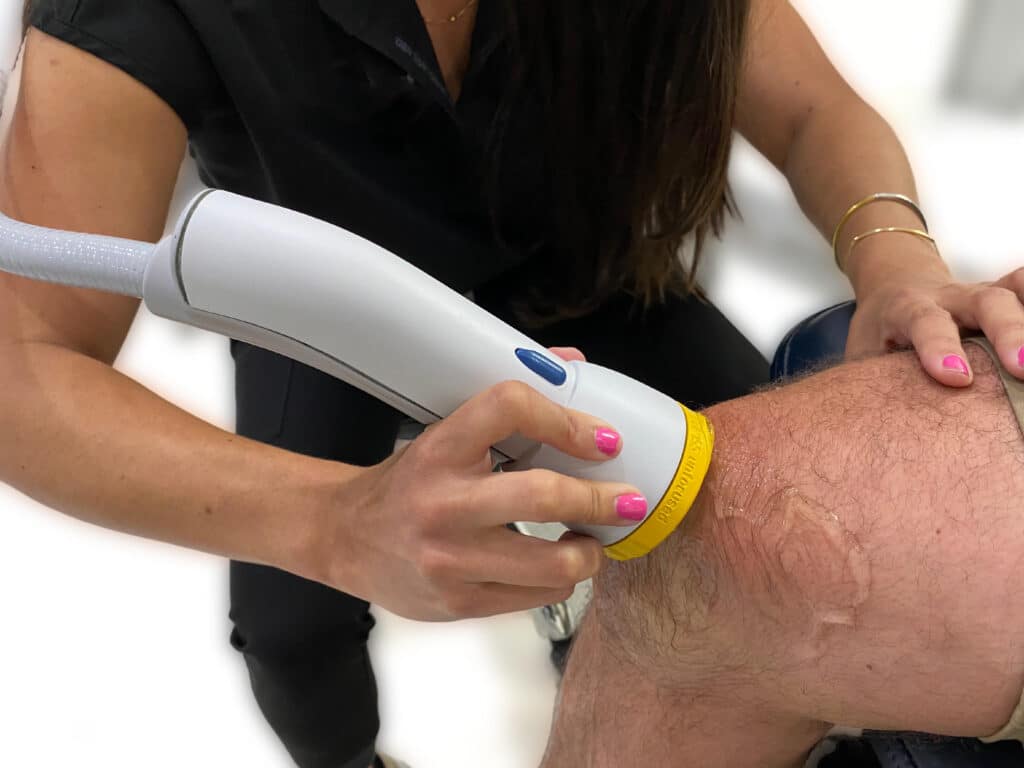
Patellar tendon pain, arthritis, and meniscus problems are very different. Here's why the diagnosis drives whether shockwave makes sense.
Short answer: shockwave therapy has the most research for patellar tendinopathy (jumper's knee) and growing research for knee osteoarthritis symptoms. It won't fix a mechanical problem like a locked meniscus tear or replace a worn joint. A clear diagnosis tells you what to expect.
Common Causes of Knee Pain
- Patellar tendinopathy — pain below the kneecap with jumping or stairs
- Osteoarthritis — stiffness and aching in the joint
- Meniscus tears — catching, locking, or swelling
- Patellofemoral pain — pain around the kneecap
The Mayo Clinic outlines causes and warning signs.
Where Shockwave Fits
Research on shockwave for patellar tendinopathy and knee osteoarthritis is on PubMed. The AAOS covers standard arthritis care.
When to Get Imaging or a Referral
Locking, giving way, significant swelling, or trauma deserve evaluation and possibly imaging.
See our knee pain page and our article on shockwave for meniscus tears.
Ready to find out if SoftWave can help you?
Get our $49 new patient special — consultation, exam, and a sample SoftWave treatment.