
Shockwave Therapy for Plantar Fasciitis: What to Expect After Other Treatments
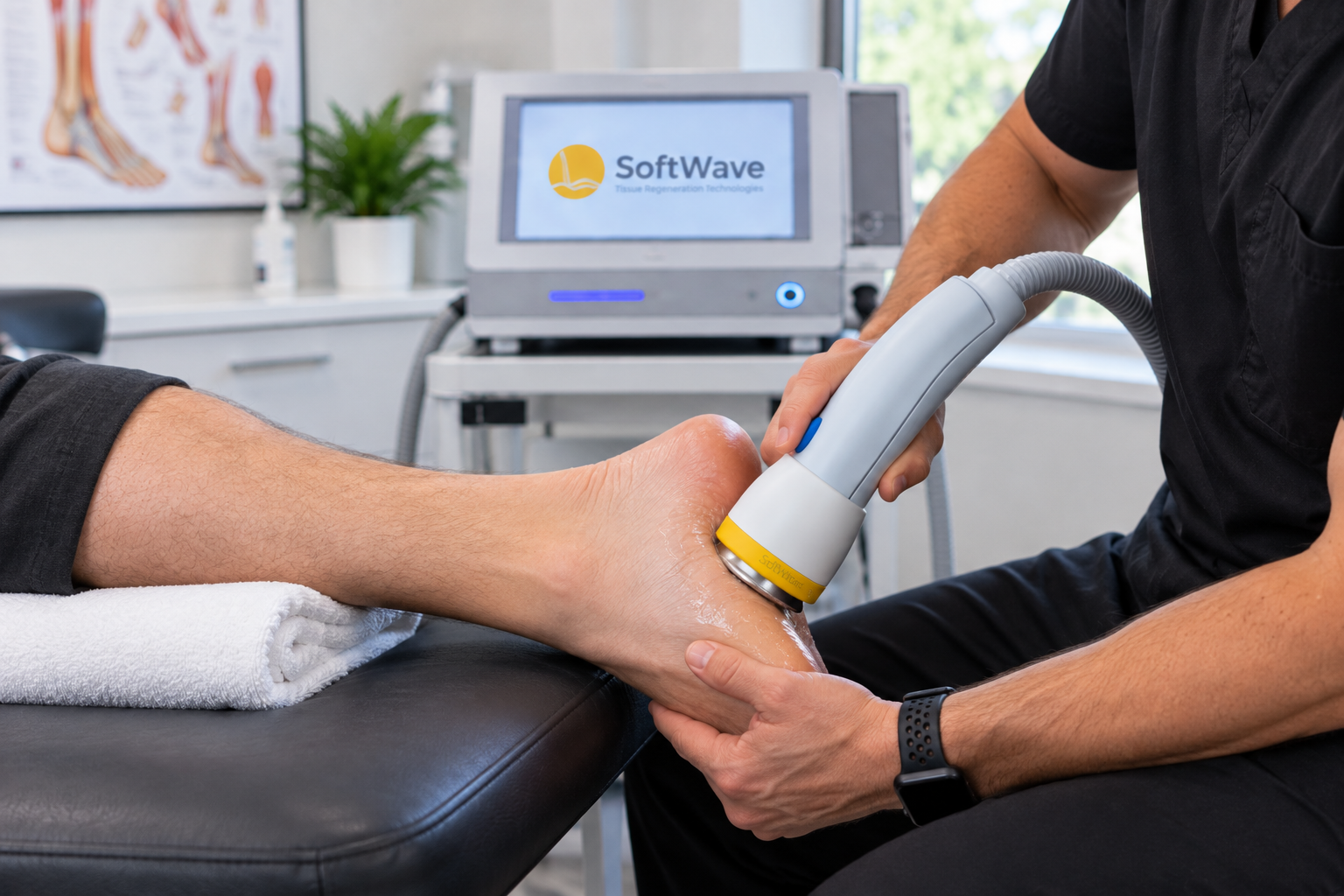
When heel pain lingers after stretching, insoles, and rest, shockwave therapy is one option with research behind it. Here's what to expect.
Short answer: for persistent plantar fasciitis that hasn't settled with conservative care, shockwave therapy is one of the better-studied non-surgical options. Results vary — some people return to hiking and running, others see partial benefit or none — so a clear diagnosis and progress tracking matter.
Confirming the Diagnosis
Classic plantar fasciitis causes sharp pain with the first steps in the morning. Nerve entrapment, fat pad irritation, and stress fractures can mimic it. The Mayo Clinic describes typical symptoms.
Treatments Already Tried
Your history of stretching, footwear, orthotics, physical therapy, and injections helps shape the plan. The AAOS notes most people improve with nonsurgical care, and shockwave therapy is an option when symptoms persist.
Evidence for the Proposed Protocol
Multiple trials and meta-analyses have studied shockwave for chronic plantar fasciitis — see PubMed.
Tracking First-Step Pain and Walking
- Rate first-step pain each morning (0–10)
- Note how long you can walk or stand
- Record any change in activity or footwear
Learn more on our plantar fasciitis page and in Shockwave Therapy for Plantar Fasciitis.
This article is general education, not a diagnosis. Results vary, and improvement often reflects several factors — exercise, footwear, workload changes, time, and other care — not the device alone.
Book a heel-pain evaluation to review your options.
Ready to find out if SoftWave can help you?
Get our $49 new patient special — consultation, exam, and a sample SoftWave treatment.