
How Long Does Shockwave Therapy Take to Work?
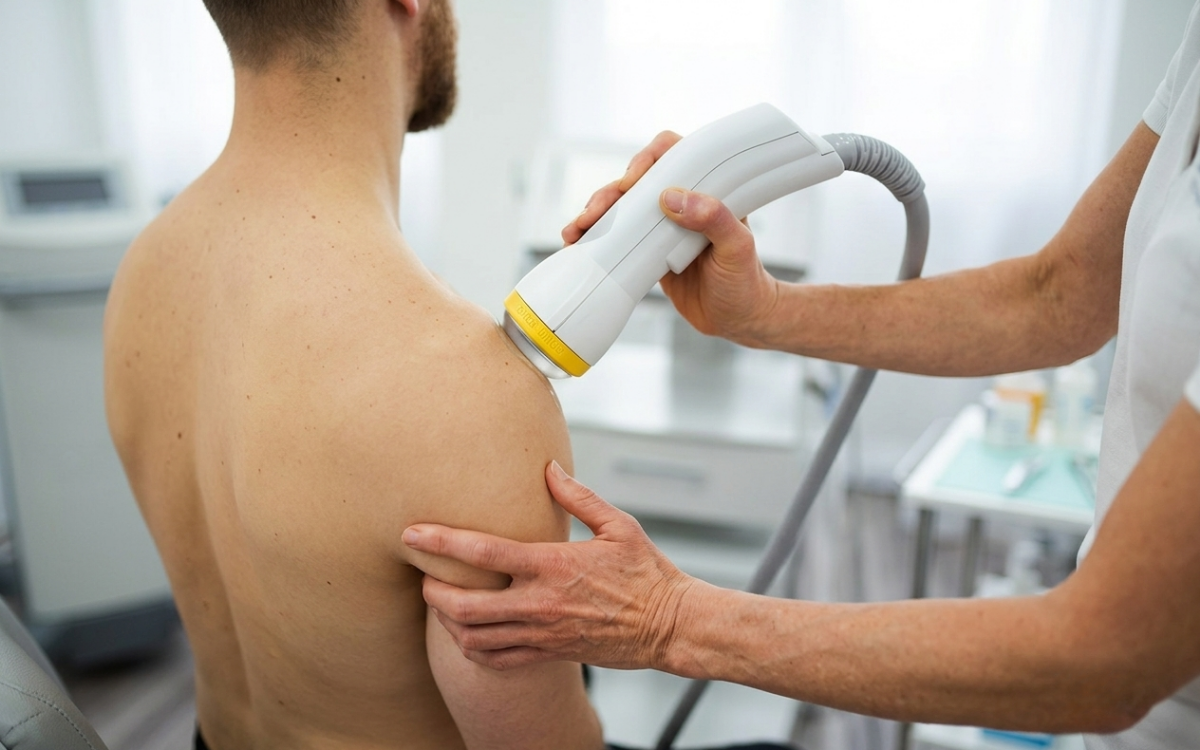
Some people notice short-term relief early; meaningful functional change often takes weeks and may continue after the last session. Here's how to think about the timeline.
Short answer: there are three timelines. Some people feel short-term relief within hours or days, functional progress usually builds over several weeks, and many studies measure final outcomes weeks to months after the treatment course ends. No clinic can promise a result by a fixed date.
Short-Term Relief
Relief right after a session is real for some patients but may fade within hours. That's useful information, not a final result.
Tracking Progress Between Visits
Pick a few measures that matter to you — first-step pain in the morning, how far you can walk, gripping a coffee cup, sleeping on your side — and track them. These give you and your clinician a clearer picture than day-to-day pain alone.
Follow-Up After the Treatment Course
Many shockwave trials assess outcomes at about 3, 6, and 12 weeks or later after treatment — see examples on PubMed. Tendon tissue adapts slowly; the Cleveland Clinic notes tendon problems often take weeks to months to settle.
What Happens Without Improvement
If you aren't improving by your planned review point, the plan should change — reassessing the diagnosis, adjusting rehab, or exploring other options. See Shockwave Therapy Did Not Help: What to Review.
For long-term outcomes, read How Long Do Shockwave Therapy Results Last?. General guidance on recovering from soft-tissue injuries is also available at MedlinePlus.
This article is general education, not a diagnosis. Results vary, and improvement often reflects several factors — exercise, footwear, workload changes, time, and other care — not the device alone.
Ask when your progress will be reviewed — contact us or book an evaluation.
Ready to find out if SoftWave can help you?
Get our $49 new patient special — consultation, exam, and a sample SoftWave treatment.